
The Best Proven Skincare Peptides for Younger, Thicker, Firmer, Glowing Skin

Updated: Mar 5

There are hundreds of specific peptides, some synthetic – some bio-mimetic, used in skincare that function in a variety of different ways (with some peptides having multiple functions): Signaling (boosting collagen); Carrier (delivering nutrients like copper); Enzyme-inhibiting (smoothing wrinkles); Neurotransmitter-inhibiting (relaxing muscles); DNA and cellular repairing and detoxifying (anti-aging and rebuilding). The following lineup includes the top research-backed skincare peptides that are proven both clinically and in real world use to provide the most benefit, be well-tolerated and cover all the main functional pathways for maximum skin benefit. The most impactful anti-aging skincare regime includes a variety of peptides to address all of these pathways.
TLDR;
GHK-Cu – Boosts collagen and elastin production for thicker, more elastic skin;, resets gene expression for younger acting skin, and boosts skin repair and healing.
Matrixyl – Gently boosts collagen types I, III and IV especially in combination with other peptides, improves skin roughness and firmness.
Syn-Coll – Boosts collagen production, improves elasticity, help protect existing collagen from degradation
Argireline & Syn-AKE – reduce movement-driven wrinkles by relaxing muscles - gentle botox alternatives
Progeline – Cleans cells to reduce cellular again resulting in firmer skin, especially at the jowls, or jawline
EGF – Cellular signaling to increase production of collagen, elastin, fibroblasts and hyaluronic acid; Helps repairs photodamage.
OS-01Senescence Peptide – targets DNA degradation and senescent cells to prevent skin breakdown from aging and environmental factors like UVB, and increases skin thickness
Product recommendations: Platinum SkinCare, The Ordinary, OneSkin, Skin Biology
1. Copper Tripeptide-1 (GHK-Cu)


Copper peptides were first identified by Dr. Loren Pickart in the 1970s, and extensive research has confirmed their efficacy. A notable study found that topical GHK-Cu increased collagen production in skin by 70% after one month, outperforming even topical tretinoin (which showed ~40% increase). Multiple studies (in vitro and in vivo) demonstrate GHK-Cu’s role in wound healing, angiogenesis, and activation of skin remodeling, explaining its anti-wrinkle effects. In a 2005 clinical trial, a cream with GHK-Cu significantly improved aged skin appearance over 12 weeks. GHK-Cu has even been shown to reset gene expression in older cells to a more youthful profile, affecting thousands of genes related to tissue regeneration. Its ability to boost collagen, elastin, and other matrix components makes it one of the most scientifically backed anti-aging ingredients.
2. Palmitoyl Pentapeptide-4 (Matrixyl)


Palmitoyl pentapeptide-4 is extensively studied and was a breakthrough ingredient in the early 2000s. A double-blind 12-week clinical trial showed that a 3 ppm concentration of Matrixyl in a moisturizer significantly reduced wrinkle depth and area compared to placebo. Another study found that Matrixyl-containing cream led to substantial increases in collagen I, III, and IV synthesis in skin biopsies, comparable to results from retinol – but with less irritation. In fact, the peptide’s inventor reported that Matrixyl doubled collagen production in vitro, outperforming vitamin C and retinoic acid in some measures. Moreover, the Matrixyl 3000 complex (a combo of Palmitoyl Tripeptide-1 and Palmitoyl Tetrapeptide-7*) showed in a manufacturer-run trial that a 3% formulation used for 2 months yielded a 39% reduction in the area occupied by deep wrinkles, a 19.9% reduction in average wrinkle depth, and improved skin roughness and elasticity. These data underscore Matrixyl’s potency as a wrinkle-fighter via collagen renewal. * Palmitoyl Tetrapeptide-7 is excluded from this list as it has similar but less dramatic results to others.
3. Palmitoyl Tripeptide-5 (Syn-Coll)

Palmitoyl tripeptide-5 is a collagen booster and firming peptide. It penetrates the skin and stimulates the TGF-β pathway (growth factor) in fibroblasts, thereby increasing production of collagen types I and III to firm the skin, improve elasticity, and reduce the appearance of wrinkles and fine lines. Over time, skin treated with this peptide becomes smoother and more resilient. Syn-Coll is also reported to help protect existing collagen from degradation by inhibiting matrix metalloproteinases (enzymes that break down collagen). The overall result is a gradual “plumping” effect on wrinkles and a more lifted look to sag-prone areas. It’s gentle and can be used on the entire face, including around the eyes, to target crow’s feet and crepey skin. While not as publicized as Matrixyl, Syn-Coll has promising data behind it. In vitro studies have shown this tripeptide can increase collagen I synthesis by up to 119% and even boost hyaluronic acid production in the skin. A clinical study (Monash University, 2010) evaluating a cream with Palmitoyl tripeptide-5 found a 25% reduction in wrinkle size compared to placebo-treated skin, as well as a measurable improvement in skin roughness after 12 weeks.
4. Acetyl Hexapeptide-8 (Argireline)
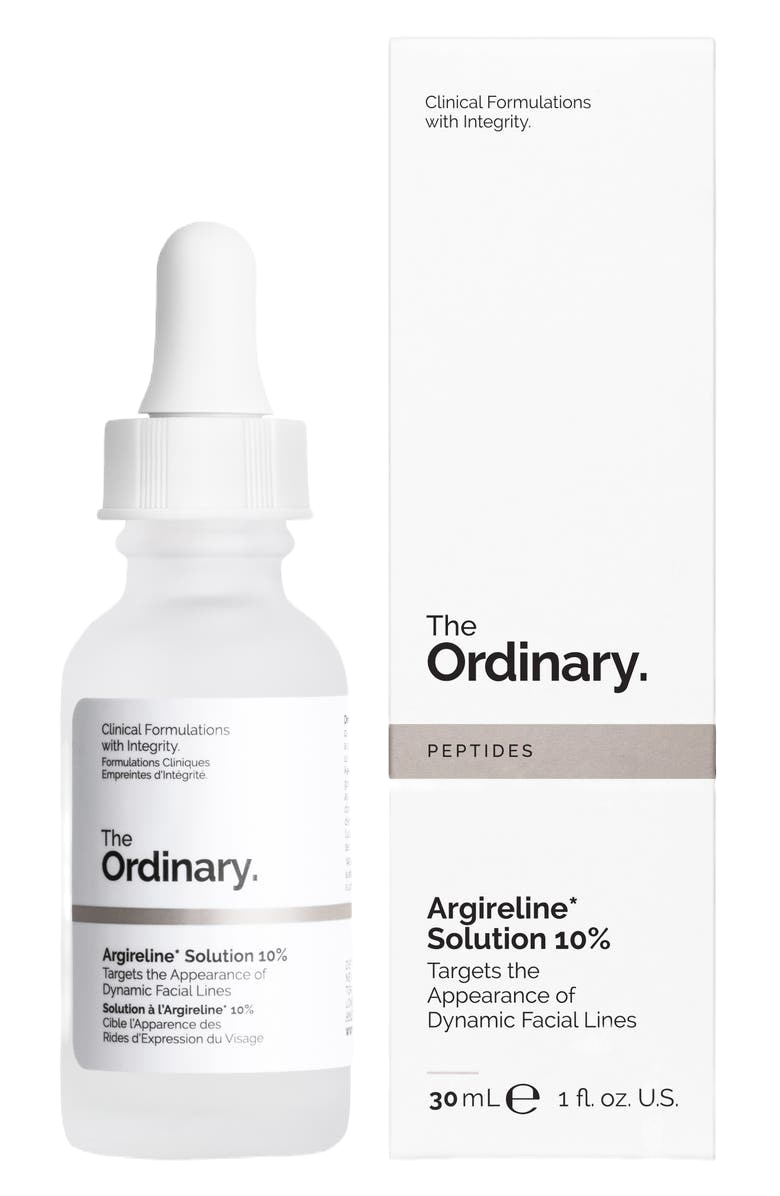
Argireline is a neurotransmitter-inhibiting peptide that targets dynamic wrinkles – the lines that form from repeated facial expressions (like crow’s feet, frown lines, and smile lines). It works by relaxing facial muscle contractions. It helps prevent the deepening of expression lines and can lessen the depth of existing wrinkles, somewhat akin to a milder topical Botox. Importantly, it does this without paralyzing the muscles – you still have normal facial expressions, just potentially with reduced wrinkle formation. The result is often a smoother appearance in areas prone to creasing, giving the skin a more relaxed and younger look. A landmark study published in 2002 demonstrated that a cream with 10% Argireline reduced wrinkle depth by up to 30% after 30 days of use around the eyes.
5. Dipeptide Diaminobutyroyl Benzylamide Diacetate (Syn-AKE)


Syn-AKE is another neuropeptide with a wrinkle-relaxing effect, but it works a bit differently from Argireline. It blocks the chemical signals that cause muscle fibers to contract. This peptide, marketed as SYN®-AKE, is a dipeptide derivative modeled after a segment of Waglerin-1, which is a peptide found in the venom of the Temple Viper snake. The efficacy of Syn-AKE has been demonstrated in both manufacturer studies and independent research. In vivo testing of a cream with 4% Syn-AKE showed impressive results: up to a 52% reduction in wrinkle size after 28 days of daily use. Participants noticed skin looked smoother and more even, some within as little as one week of use. The combination of Argireline + Syn-AKE in formulations has been noted to cover different mechanisms (SNARE vs. receptor blockade) and can yield additive improvements in wrinkle depth. Overall, the data consistently show marked wrinkle depth decrease (often 20–50%) in as little as one month with diligent application of Syn-AKE.
6. Trifluoroacetyl Tripeptide-2 (Progeline)

This peptide is designed to target a very specific cause of aging: the accumulation of a protein called progerin in cells (progerin is implicated in cellular aging and famously in the disease progeria). By reducing progerin, Progeline helps improve skin elasticity and contour – notably it is marketed to combat sagging in the lower face (jowls and jawline) and neck. It offers a more lifted, youthful look by targeting the “sag” factor of aging skin that many other peptides don’t directly address. As an innovative peptide, the published data on Progeline is growing. In manufacturer trials, a cream with 2% Progeline showed compelling results: after 28 days, skin elasticity and firmness were improved by 20%, and after 56 days users saw a 10% reduction in sagging along the jawline. Visually, this translated into a more snatched jawline for many participants.
7. Epidermal Growth Factor (EGF / Oligopeptide-1)

Epidermal Growth Factor is a naturally occurring polypeptide (protein) made of 53 amino acids. In skincare, a bioengineered form (often listed as sh-Oligopeptide-1) is used. It’s much larger than typical synthetic peptides, but is included here because of its potent anti-aging effects. EGF is a cell signaling protein that stimulates cells to behave in a younger, more regenerative way. Its primary role in skin is to promote the growth and differentiation of keratinocytes (skin cells) and fibroblasts, which leads to increased production of collagen, elastin, and hyaluronic acid. The benefits include faster skin renewal, improved skin thickness, and repair of photodamage. By accelerating cell turnover and boosting the dermal matrix, EGF helps smooth fine lines, reduce the appearance of wrinkles, and improve skin texture and elasticity. It’s also known to aid in wound healing – in fact EGF was first used in burn treatments – so it can strengthen the skin’s barrier and even out skin tone. Essentially, EGF gives aging skin a push to regenerate like it did when it was younger, leading to firmer, more radiant skin with continued use.
8. Decapeptide-52 (OS-01 Senescence Peptide)

A new and exciting peptide on the beauty scene, Decapeptide-52 is a biomimetic anti-aging peptide. Studies on 3D human skin models showed thicker, more youthful epidermis and dermis, with improved cellular “health” approaching that of young skin. In a head-to-head comparison, OS-01 outperformed topical retinol. OS-01 increased epidermal thickness, reduced cellular senescence markers, and avoided inflammatory cytokine induction whereas retinol increases pro-inflammatory SASP factors. OS-01 treatment significantly reduced the tissue’s DNA methylation age, effectively making old skin epigenetically younger. The peptide also lowered the expression of senescence and SASP markers in the tissue. These laboratory and ex vivo outcomes suggest that by clearing out senescent cells in skin, OS-01 can restore youthful function (e.g. better barrier, more proliferation, balanced inflammation) in aging tissue.
* Thank you for supporting this site and my mission to share powerful, evidence-based wellness solutions for women. The direct-to-company affiliate links connect you with small, ethical businesses, and using them helps sustain the work we’re doing. There may also be Amazon affiliate links and I earn from qualifying purchases if you choose to use them.


Comments